Tag Archives: Wales

Stage set for England vs. Wales showdown

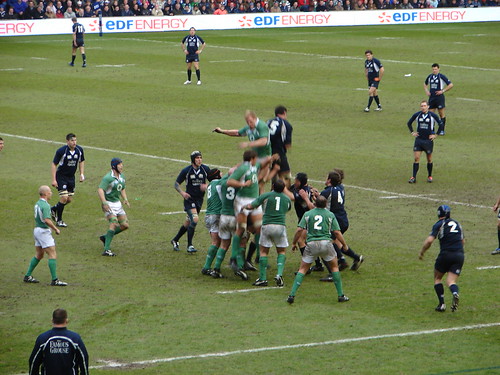
Photo credits to Chris Brown

After England’s quiet display against Italy last weekend, the stage is set either for England to triumph under pressure or for Wales to ruin the English party and come out on top. After a poor weekend all round in the Six Nations, the one positive that came out of it all is the set-up of a huge clash in Cardiff this Saturday with both England and Wales looking to be crowned champions and the former chasing that elusive Grand Slam.

After a game where England looked to be outplayed, overpowered and dominated, there is no doubt that Stuart Lancaster is left with some almighty selection headaches. The young players blooded in what appeared to be a relatively easy game played well, yet the changes to the team resulted in an unsettled England side at times lacking that clinical edge needed to achieve the Slam.

In a game of changing momentum at scrum time England seemed to lack the dominance they had in their earlier games and buckled under pressure from Italy on certain occasions. The ongoing debate over the England centre partnership will also rage on after Sunday’s match.

Arguments claiming the partnership is too one-dimensional were fuelled with England showing a lack of attacking flair and the Tuilagi crash ball not being as effective as in the past. Unfortunately for Billy Twelvetrees, who may be the one to give the English backline that playmaker it needs in the centre, he came on too late in the game to make a real impact.

He came on at a time when English backs were very much against the wall and had a purely defensive role as Italy threw wave after wave of attacks at the English defence as the game drew to a close. It could be argued that the one-dimensional nature of the English centres results in the likes of Ashton, who had a very quiet game, to underperform as he is struggling to get his hands on the ball.

Too many bad decisions – Flood cutting a hard angle in the first half and getting held up rather than feeding the overlap, or a bad pass, Robshaw popping it deep to Goode in the second half rather than passing it down the line – meant that England failed to make the most of at least two very clear try scoring opportunities.

As a result of this, and the excellent play by the Italian side who were always building momentum, England seemed to be chasing the game despite leading for almost the entirety of the game. As Stuart Lancaster said in a post-match interview with the BBC, commenting on the English accuracy not being good enough, “the last pass” too often failed to get to the right hands to capitalise on these chances.

They lacked the dominance they had over the French, Scottish and Irish and Italy seemed on top for the majority of the game despite the score line. England did defend well, especially in the closing plays where the Italian pressure was formidable and it took a huge defensive effort by the English to hold them out. However, this appeared to be largely scramble defensive as England seemed incapable of slowing the momentum of an in-form Italian side.

In the build-up to the game, England kept reiterating they were only focused on Italy. However, it seems that was not the case. It’s easy to be complacent, and I believe there was a little of this, as what should have been a relatively simple fixture was overshadowed by a growing pressure to perform and supply the English fans with the long awaited Grand Slam which has not been achieved in a decade.

Despite the apparent doom and gloom and the huge challenge of facing a Welsh team re-finding its form in the cauldron that is the Millennium Stadium, all is not lost. Most of the players given an opportunity to fight for their place played well, the comeback of Tom Croft who gave England another excellent opportunity at the lineout is a huge positive and, on the whole, the English defence proved itself under very testing conditions.

It also relieves some of the pressure on England. Yes they are pushing for the Grand Slam, but now most will agree that going into the final game against Wales in Wales they are the underdogs. The pressure of a grand slam, although in some ways will be more intense than ever, is also somewhat lifted.

A shaky performance against the under dogs of the Six Nations may be exactly what a confident young English side needs, providing a reality check and perhaps giving England the motivation they need to deliver the nation’s first Grand Slam in a decade.

Mike Stanton


[poll id=”27″]

Six Nations: Week 4 report

Wales head into their final game with a slender hope of taking the title. Photo credits to Simone Ramella

After the break last weekend, the Six Nations returned with Scotland hosting a resurgent Wales, France still hoping for their first win of the tournament against Ireland, and England hoping to keep their Grand Slam hopes alive with a win against Italy on Sunday.

The first match of the weekend saw Scotland take on Wales in wet and miserable weather. It was perhaps little surprise then that the match was dominated by penalties, mistakes, and the sound of referee Craig Joubert’s whistle. In fact, the game is likely to be remembered more for setting a new record for the number of penalties in a Six Nations match than for any of the rugby on show.

The first half was dominated by the boots of Leigh Halfpenny and Greg Laidlaw, and they traded blows until Wales managed to take one of the few try-scoring opportunities they created. A powerful break by George North was carried forward by the Welsh pack, and after some sustained pressure on the Scottish line, Hooker Richard Hibbard was able to force his way over.

The second half was not much of an improvement and Halfpenny continued to rack up points for Wales, 23 of them in all. Ultimately, this proved to be the difference between the sides as Scotland failed to keep their discipline. A forgettable game ended 18-28 to Wales, who kept their weak title hopes alive.

Ireland then took on France in an infinitely more exciting encounter in Dublin. The French fought back from 13-3 down at half-time to score ten unanswered points and snatch a deserved draw.

The first half saw Ireland dominate for long periods, and they were rewarded when captain Jamie Heaslip went over following a devastating maul by his fellow forwards. This and the boot of youngster Paddy Jackson, in for the injured Jonathan Sexton, saw Ireland take a commanding lead at the break.

This proved not to be enough, however, as France pressed in the second half against an increasingly lethargic Irish side. Outstanding number-eight Louis Picamoles forced his way over the line from close range late on to bring France within two points of drawing level. Fly-half Freddie Michalak then held his nerve to land the vital conversion which drew them level. France are still looking to avoid a last place finish in the competition, but this result will certainly give them heart going into next week’s game with Scotland.

Italy made the trip to Twickenham for the final game of the weekend, with England looking to continue their march to a first Grand Slam in ten years. Expectations suggested a walk-over for the English, but it proved anything but. Ultimately, the boot of Toby Flood, replacing the injured Owen Farrell, gave England a hard-fought victory over an organised Italian side.

At half-time England had a comfortable 12-3 lead, but a second half try from Luke MacLean and kicks from fly-half Luciano Orquera made it a tense finale. Flood’s penalties were enough to see England home, but not without having to defend stoutly against Italy in the closing stages. England were ultimately able to keep their Grand Slam hopes alive as the match finished 18-11 in their favour.

The Six Nations tournament reaches its conclusion this weekend (March 16-17).

Sam Davies

Six Nations: Week 3 Report

Scotland and Ireland battling it out. Photo credits to Paddy McCann

Week three of the RBS Six Nations saw Italy become unstuck by Wales, England keep alive their grand slam hopes by beating  a rejuvenated France, and Ireland prove that you can lose a match despite having 80% territory and possession as Scotland came away the surprise victors.

The weekend got under way in a wet and windy Rome with Wales under pressure from the start. The Italians barely left their own half and responded with a couple of penalties from fly-half Kris Burton, leaving the score at 6-9 at half time.

Full-back Lee Halfpenny was exemplary in his kicking display, and was a deserved man of the match. The first Welsh try was opportunistic, with Jonathan Davies capitalising on loose Italian defence. Throughout the game, Italy looked disjointed and only a shadow of the side that beat France so unexpectedly at the Stadio Olimpico.

The Azzuri were average in the face of the Welsh scrum – Martin Castrogiavanni was sin-binned for a scrummaging offence – and with Italy down to 14 men, Welsh winger Alex Cuthbert ran in a cleverly worked try aided by play from the middle by Mike Philips. A final score of 9-23 to Wales was representative of the entirety of the play that was in Wales’ favour, and showed their consistent potential lying second in the table and only two points behind England.

Later, the day saw England take on France at a freezing Twickenham. Tempers flared throughout the first half, giving weight to the age old Anglo-French rivalry.  They belied their inexperience to come back from 10-9 down at half time and a first half where England were clearly the weaker side.

France looked rejuvenated, with Fofana’s expertly worked try standing out as the highlight of the first half.  Parra had a neat game at fly-half, missing only a few penalties; his in-play decisions were well thought out. Tuilagi and Bastareaud provided power in the centre at the back for their respective sides. England were further helped when France took off some of their best players in exchange for the likes of Michalak and Szarzewski.

Tuilagi’s try came completely out of the blue, and proved to be the break that England needed with the score then standing at 20-10 in their favour. Despite missing a tricky conversion for Tuilagi’s try, Owen Farrell’s kicking and play making phases further illustrated why many believe he is the ‘new Jonny Wilkinson’. The match finished 23-13 to England.

French coach Philippe Saint-Andre conceded; “So many times we tried impossible offloads and lost the ball in the contact area. England didn’t do amazing things, but they were accurate and we were not accurate enough”.

England kept alive their hopes of a first Grand Slam in a decade, while France continue to languish at the bottom of the table with zero points – surprising considering their status as pre-tournament favourites, based on their form in the Autumn Internationals where they ran out impressive wins over Argentina and Australia.

Sunday saw the attention turn to Edinburgh. Scotland had never won back to back matches in the Six Nations before, and despite the Ireland side being ravaged by injury, they still entered the encounter as favourites.

Scotland spent much of the first half in their own half showing an impressive and consistent defence, with a total of 70 tackles made in the first 40 minutes.  Despite the domination, Ireland failed to capitalise on their chances, and at half time the score stood at 0-3, their only consolation a penalty by debutante fly half Paddy Jackson.

The Scottish lineout was impressive, capitalising on the height advantage given to them by the 6’9” Richie Grey. Despite going down to 14 men in the first half when prop Ryan Grant was given a harsh yellow card, Ireland seemed unable to break through.

The second half brought more chances for the Scots, with four penalties kicked by Laidlaw, and heavy pressure on the Irish touch line.  It was the Irish however who scored the one and only try of the match when Gilroy ran over from close range aided by a Rob Kearney pass, though Jackson missed the conversion.

Ireland spent the final 10 minutes practically encamped on the Scottish touchline but they were reckless and sloppy, making simple errors. The final score was 12-8 to Scotland, meaning they lie third in the table still with a chance of winning the tournament.

The competition returns in two weeks’ time with Scotland v. Wales, England v. Italy and Ireland v. France, which should be an interesting encounter given both sides experienced narrow losses this weekend.

The Six Nations continues on March 9.

Lucy Gibson

[poll id=”17″]

Six Nations: Week 2 Report

Scotland taking on Italy at Murrayfield. Photo credits to Daniel Richardson

Though the second round of fixtures in this year’s Six Nations championship failed to live up to the explosive start the tournament enjoyed a week ago, it nevertheless served up some intriguing results. England established themselves as favourites for the title with a well-fought victory in Dublin; Scotland gained an impressive win over Italy; whilst Wales showed immense character in overcoming a woeful French side in Paris.

Having beaten France in extraordinary fashion seven days ago, Italy now took on Scotland at Murrayfield and went into the game full of confidence with many people viewing them as favourites to grab only their second away win since they joined the championship in 2000. Scotland, in contrast, entered the fixture on the back of a convincing defeat at the hands of England in the opening week.

Come the final whistle, however, Scotland had produced a comfortable victory over the Azzurri courtesy of some clinical finishing and poor errors from the Italian side. Italy’s half-back’s, so effective and controlling against the French, crumbled under pressure from an exceptional Scottish defence and were unable to give their team any foothold in the game at all. By contrast, Greg Laidlaw and the Ruaridh Jackson were able to dictate play with both their kicking and running games. This culminated in Scotland scoring the opening try courtesy of a good finish by Dutch-born winger Tim Visser. At half-time the Scots led 13-3.

After the break Italy tried to get into the game, but what had worked last week in Rome was ending in simple errors here at Murrayfield. Matt Scott was able to score for Scotland after half-time with Laidlaw adding the conversion. Italy’s woes were summed up when fly-half Orquera butchered a certain try by throwing a pass that was intercepted by winger Stuart Hogg who ran eighty metres unopposed to touch down. Orquera was quickly substituted for Kris Burton, ending a dismal performance.

Italy were punished further when Lamont scored from turnover ball, and despite a consolation try for back-row Alessandro Zanni in the closing stages, there was little to cheer for the Italians. Scotland secured a 34-10 win that was as vital as it was impressive, largely through their fierce defence. They will hope to build on this in the next games.

The evening game on Saturday saw Wales travel to Paris to face a French side still reeling from their unexpected loss to Italy last weekend. Both sides had made losing starts to the campaign, and a lack of confidence was evident throughout the encounter. An extremely tight game was only settled by George North’s late try and saw Wales post their first win in eight games, and Rob Howley’s first since taking charge.

Defences were on top for the most part of the game and neither side was able to create many try-scoring opportunities. Wales engineered one, seizing it excellently and gaining the win their defensive work warranted. Both sides, usually noted for their extravagant running play, were understandably cagey in the first half and penalties from Michalak and Halfpenny made the score 3-3 at the break.

Both added another in the second half to make it 6-6 before a try finally came when North crashed onto a kick through by Dan Biggar to score in the corner. Halfpenny was able to add the conversion from the touchline, before also nailing a penalty and securing the Welsh victory by 16 points to 6.

The final game of the weekend saw England and Ireland take the field in Dublin. Both had secured impressive wins in their opening matches of the tournament and the winner here would undoubtedly be seen as the favourite to go on and win the tournament. The match was played in difficult conditions, and much of the play reflected this with no tries being scored for either side. England were ultimately able to master the situation better and played with greater composure and control than a vastly more experienced Irish side.

Throughout the encounter neither side looked like scoring a try and it was thus up to the boots of Owen Farrell and Ronan O’Gara (on for the injured Jonathan Sexton early in the match) to provide the points. Though Ireland were able to work themselves into promising positions on several occasions, basic handling errors prevented them from gaining real momentum.

Some of these errors were caused by the ferocious England defence, but the Irish will still be disappointed with their lack of composure when they entered England’s 22. Even Brian O’Driscoll, playing despite the birth of his first child earlier in the day, knocked-on under little pressure and conceded field position to England in the second half.

O’Gara and Farrell took the scores to 6-6 before England’s James Haskell was sin-binned in the 56th minute for deliberately playing the ball on the ground. Roared on by the Dublin crowd, this seemed to be the moment where the game would swing in Ireland’s favour. But some good defensive work and with Owen Farrell able to gain field position with his kicking game, England were able to weather the storm and go into what would prove to be an insurmountable lead.

Two penalties made it 12-6 to England, and this is how it stayed until the final whistle. Ireland can blame their inability to maintain their composure close to the English line for this defeat. England, however, put in a valiant and professional performance to earn their first win in Dublin for 10 years and mark themselves as favourites for the championship.

Sam Davies

Six Nations: Week 1 Report

France taking on Italy. Photo credits to Matteo Pieroni

The 2013 Six Nations Championship got off to an exciting start with wins for Ireland, England and Italy during the opening weekend.

The first match in Cardiff was an entertaining spectacle from start to finish as Ireland held off a spirited Welsh comeback to win 30-22. After announcing that this would be his final Six Nations earlier in the week, all eyes were on Brian O’Driscoll and he duly delivered by setting up the first try.

A lovely team move saw the ball spread left before O’Driscoll jinked past one defender and released Simon Zebo to score in the corner. This was converted by Jonny Sexton and he soon added another 3 points when debutant Andrew Coombs conceded a penalty in front of the posts.

Ireland smelt blood and soon surged even further ahead. Rory Best charged down a Dan Biggar clearance before releasing Jamie Heaslip who fed the ball to Zebo. He acrobatically kept the ball alive with a cheeky back heel and eventually fed Cian Healy to touch down and give his team a 20 point lead at the interval. When O’Driscoll crashed over from short range for his 26th Six Nations try, all looked lost for the Welsh as they trailed 30-3. However, the introduction of Justin Tipuric livened up the hosts and they soon had their first try on the board through Alex Cuthbert.

The tide had turned and pressure from Wales saw two Irish forwards sin-binned for ruck offences, creating an opening for the gap to be narrowed. Leigh Halfpenny obliged with a try in the corner before Exeter Chiefs prop Craig Mitchell also went over from close range. It was not enough however and Ireland held on for an important victory.

Despite dominating territory and possession, it was a disappointing day for Rob Howley’s men who have now lost eight successive matches and head to Paris needing a big improvement to challenge the French. Ireland host in-form England next and will have to replicate their first half performance to stand any chance.

England also got off to a winning start at Twickenham, putting in a clinical performance against Scotland. An Owen Farrell penalty gave the hosts an early lead but the crowd was soon silenced when Stuart Hogg pierced a gap in the defence to allow debutant Sean Maitland to score his first international try.

After both sides traded penalties, England took control of the match as the first half wore on. The forwards hard work paid off when Chris Ashton was able to charge over from close range. Farrell added the extras and another penalty to give his team a comfortable 19-11 lead at half time. After the break, it was the turn of Billy Twelvetrees to score on debut in a similar fashion to Ashton’s earlier effort. Farrell converted before spreading the ball wide for Geoff Parling to score in the corner.

Although Scotland hit back through a wonderful individual try from Hogg, it was England who had the final say as substitute Danny Care burrowed over in the final minute for a final score of 38-18. It was a dominating display from England to retain the Calcutta Cup and coach Stuart Lancaster expressed his delight with the result while stressing that they must ‘continue to build on it’ against Ireland next week. Scotland now head into their crunch match against Italy needing a victory to keep their hopes alive.

The biggest shock of the weekend came in Rome where Italy overcame fierce rivals to France to get their campaign off to a perfect start. The Azzurri got up and running after just five minutes as captain Sergio Parisse finished an excellent team move by going over in the corner for a converted try.

France hit back straight away as Louis Picamoles beat two defenders before barging over the line. The teams exchanged penalties before another excellent counter attack from France led to Benjamin Fall running in under the posts. A further conversion and penalty from the boot of Frederic Michalak meant his team led 18-13 at the interval.

The hosts came out strongly and were soon back ahead when Luciano Orquera offloaded beautifully to set up Martin Castrogiovanni before adding the extras. The lead was extended to 23-18 through a Kris Burton drop goal and this is how it stayed until the final whistle as huge amounts of French pressure could not find a way through a disciplined Italian defence.

It was an excellent start for Jacque Brunel’s side and they will now want to push on and prove more people wrong during the rest of the tournament. France on the other hand will need to do some soul-searching and regroup ahead of their big match against Wales. It was an excellent first weekend of action and hopefully the entertainment will continue for the rest of the tournament.

The Six Nations continues on February 9.

Simon Dewhurst

Six Nations 2013 Preview

Scotland and Ireland doing battle at Murrayfield. Photo credits to Paddy McCann

The Six Nations gets underway this weekend and it promises to be an exciting few weeks as the northern hemisphere’s finest fight for the title. The autumn produced some results that few would have predicted as reputations were both made and dented against the touring southern hemisphere sides. The next few matches offer a crucial chance for teams to set the foundations for the 2015 World Cup. With the Lions Tour to Australia on the horizon, this year’s tournament is perhaps the last chance for those eligible to play down-under to stake their claim for a place in Warren Gatland’s team. More pressingly, however, teams like England need to work on what they achieved in the autumn, whilst Wales and others will be looking to rebuild and move on from their dismal showings against southern hemisphere opposition. The tournament favourites must be France, but as form seems to mean very little to the French, the championship could be extremely open.

Wales

The Welsh come into the tournament off the back of a truly awful autumn campaign in which they lost every match they played and looked a complete shadow of the side that won the Grand Slam in last year’s tournament – vast improvement will be necessary if they are to replicate that achievement. Wales will be hoping that Dan Biggar is able to bring his regional form into the national side and perhaps reignite their faltering backs.

There is no doubting Wales’ quality, particularly in the backline where they have previously combined power and speed to devastating effect. Yet what they seemed to be lacking in the autumn was a sense of self-belief. No doubt the absence of Warren Gatland had something to do with that, and they will miss him again this tournament. If they are to challenge for the title a strong start will be necessary to reinvigorate the squad and get back some of that lost confidence. With this in mind, their first game against Ireland at the weekend may prove vital to their performance over the whole tournament: win it and that self-belief may come streaming back, lose it and the prospect of facing France, Italy and Scotland away from home begins to look extremely daunting.

Prediction: 2nd

England

England will fancy their chances this time around having ended the All Blacks twenty match unbeaten run at Twickenham two months ago. That was an exceptional performance, and if they can repeat that for five games, they will easily win the Grand Slam. Though not impossible, it’s nonetheless improbable. Though England took apart the world champions in the autumn, they also lost to both Australia and South Africa, and Stuart Lancaster has been quick to dismiss the effect of that win over New Zealand. What is guaranteed is that the win in the autumn has put the squad under expectations that they have not experienced under Lancaster so far.

The last twelve months has seen improvement from this England side, but it has not been vast. Since Lancaster took over they have won six, lost five and drawn one of their 12 games. An opening game against Scotland is a good fixture for England to begin their championship, and assuming they win that they should be able to push on and have a decent tournament. Though a Grand Slam seems unlikely, if England managed to channel some of the performance against New Zealand into the next few matches then they may well be able to mount a title challenge.

Prediction: 3rd

France

The tournament favourites have a squad full of quality and depth in most positions; with this in mind anything less than a tournament win would be a failure for Les Bleus. Under Philippe Saint-Andre, the squad is much more settled and have been rewarded for this with results. In the autumn, the French crushed Australia and easily defeated Wales’ conquerors Samoa. Those results showed that perhaps this French side can be consistently excellent rather than sporadically spectacular.

Much will depend on the form and, perhaps more importantly, the mood of fly-half Freddie Michalak. At his best there are few better and he is capable of winning games on his own. At worst he is a drag on the entire squad and prone to sloppy errors. The mercurial ten will need to perform if France are to fulfill their grand potential in the coming weeks. Having only managed fourth place last year, this time out the French crowd are likely to have much more to cheer about.

Prediction: 1st

Ireland

Like Wales, Ireland had a pretty wretched time in the autumn and coach Declan Kidney is under considerable pressure to get some good results soon. Their tournament could rest on the outcome of their first match this weekend against Wales in Cardiff. If Ireland pick up a couple of wins from their first two games they have the capability to win the tournament – this is a big ‘if’, however.

One big factor that should raise Irish hopes is the return of the talismanic Brian O’Driscoll, the most experienced player in the Six Nations. Though he has not been given the captaincy (that honour has remained with Jamie Heaslip) his leadership as much as his considerable skill-set will reinvigorate the squad no end. Despite his return, the Irish side could still have a difficult tournament if they do not get off to a good start. This could ultimately cost Kidney his job.

Prediction: 4th

Scotland

The last 12 months for Scotland have been something of a roller-coaster ride. Having lost all their games in the Six Nations last year, they managed three victories from three in the southern hemisphere in the summer, including a sensational victory over Australia, before they recorded three autumn defeats, the last coming against Tonga. This was enough to force Andy Robinson to resign as head coach and has left the team with lots to think about as they go into their game with England at Twickenham this weekend.

Scott Johnson has taken over from Robinson and will hope to give the Scots the attacking edge they have always lacked, as well as restoring their confidence in themselves. In fifteen games in the Six Nations under Andy Robinson, Scotland managed only two wins and a draw. All the signs point to a similar story this year. They begin with a daunting trip to Twickenham and will likely struggle to find any solace except against Italy who they will expect to beat. The lack of expectation may help Scotland spring a surprise, but it is more likely that dearth of attacking talent will be their undoing once again.

Prediction: 5th

Italy

The Italians will hope that teams freeze in Rome and they are able to surprise a few with their abrasive style. Sergio Parisse is their one world class player and he will lead from the front as he always does. Trips to Italy for Wales and Ireland may prove difficult if they do not bring their ‘A’ games, but the expectation is that the Italians can eventually be worn down and their frail backline exposed by quick rugby.

Italy will undoubtedly target their game with Scotland as the one to win. This is exactly what they did last year when they avoided the ‘wooden spoon’. But this year that fixture will take place at Murrayfield, and it is for this reason that it is likely the Azzurri will finish bottom of the pile.

Prediction: 6th

Sam Davies

Wales concedes home defeat to Argentina

Photo thanks to Judy Teasdale

Wales began their autumn campaign with a disappointing defeat to Argentina at the Millennium Stadium.

The Pumas controlled much of the game and deserved their 14 point victory. In a low-key match of few chances, Argentina struck with two tries in five second half minutes to put the game beyond Rob Howley’s side.

In truth, Wales looked a shadow of the side that reached the semi-finals of the 2011 World Cup and won a Grand Slam earlier this year. In a performance bereft of any urgency or attacking penetration, they can have few complaints about the scoreline.

The game itself was a scrappy affair not helped by slippery conditions under the roof in Cardiff. A tense first-half yielded few try-scoring opportunities for either side, though Argentina’s Gonzalo Tiesi might have scored on 17 minutes if the ball had bounced kindly.

Before this Argentina had seen their influential centre Felipe Contepomi forced off with suspected knee ligament damage. This will perhaps be the last time we see the legendary 35 year-old in an Argentina shirt.

At half-time, Wales led by 9 points to 6 thanks to the boot of Leigh Halfpenny. The scoreline reflected a tight game in which defences were on top and both sides failed to find much inspiration in attack. Despite this, Argentina had done a good job of silencing the home crowd through some patient play and taking the few opportunities they managed to create –through a penalty by Contepomi, before his withdrawal, and then a drop-goal from Nicholas Sanchez, playing in only his second test. Despite his inexperience, the young fly-half was lively throughout and in many ways eclipsed his opposite number Rhys Priestland, who made some uncharacteristic errors.

Many before the game had suggested that Argentina would wilt as the match progressed, but they showed no sign of this after the break as they began the second-half with a much greater urgency than the first. Good work by the forwards earned them two penalties soon after half-time, but Sanchez failed to convert either.

Wales continued to plug away, despite consistently making basic errors, and were rewarded with 3 points when Halfpenny struck over another penalty to make the score 12-6 in their favour. This, however, was to be the end of Welsh scoring, and of any real threat. That Wales never really looked like producing a try will be a concern for their next games against Samoa, New Zealand and Australia.

The Argentine pack began to dominate Wales at the breakdown and were preventing the Welsh backline from getting any consistently quick ball. Captain Juan Martin Fernandez Lobbe typified everything that was good about the Argentine game as he carried heroically, bossed the lineout, and spoiled Welsh ball at every opportunity.

The hard work paid off in the 55th minute as number eight Leonardo Senatore was able to put winger Juan Imhoff through a gap, and he duly rounded Leigh Halfpenny to score under the posts. Four minutes later and Argentina were in again; this time Exeter Chiefs’ Gonzalo Camacho slid in at the corner despite the desperate tackle of Halfpenny.

From here the physicality of the Pumas prevented Wales gaining any real momentum and Sanchez at fly-half began to pull the strings with his kicking game. Sanchez was able to add another three points with a penalty to make the score a deserved 26-12 to Argentina. Wales attempted to get themselves back into the game but could create no genuine opportunities and resorted to some abject kicking, Priestland in particular the culprit.

With Samoa, New Zealand and Australia to come, Wales will need to improve quickly and dramatically following this display. Argentina’s forwards were utterly dominant in the second-half and Wales’s back-row was outclassed by the exceptional Lobbe and co. The Cardiff crowd will be expecting much more from their side next week.

Sam Davies

Autumn International Rugby Previews: Wales

Photo thanks to Sum_of_Marc

This autumn, the Six Nations champions and Grand Slam winners will be looking to make amends for their 3-0 defeat in Australia earlier this year. The series whitewash down-under came as a surprise to many, not least to the Welsh team themselves. On paper, the Welsh team is formidable, and represents arguably the northern hemisphere’s best chance of getting one over on the touring teams, even without their Kiwi coach Warren Gatland at the helm.

Under the stewardship of caretaker boss Rob Howley, Wales were close in each of their three games against the Wallabies and twice saw victory snatched from them in the final minutes. That the Welsh were unhappy with this showing is a tribute to the advances they have made in recent years; the tag of ‘gallant losers’ is no longer an acceptable one. After the final test, a nail-biting 20-19 defeat in Sydney, Howley claimed that his side did not want any ‘taps on the back’ as they were ‘better than that’; with Argentina, Samoa, New Zealand and Australia to face in four consecutive weeks, they will certainly need to be.

The reality, however, is that Wales possess a truly awful record against the southern hemisphere sides, and not just the big three. Wales have not beaten New Zealand since 1953 and recorded only three wins over them before that and have lost to Australia in their last seven matches. As well as this, Wales lost to Fiji as recently as 2010 and only managed an unconvincing 17-10 win over Samoa in the group stage of the 2011 World Cup. Despite this, with the backing of a capacity crowd in the Millennium Stadium, the Welsh will believe they can beat anyone, and justifiably.

Australia were there for the taking in the summer and Wales should have come away with at least one victory. On two occasions they worked themselves into winning positions only to allow Australia the chance to edge both games by giving away late penalties. Essentially, Wales were punished in Australia for a chronic lack of discipline and inability to see out the game from winning positions. Despite the possibility of being without James Hook, Mike Phillips and Gethin Jenkins against the Aussies – due to the continued conflict with their French domestic clubs – with a little more composure and the eradication of silly errors in dangerous areas, Wales have the quality to emerge victorious in Cardiff on the 1st of December.

The potency of the Welsh backline is obvious and scoring tries should not be a problem for them, as it may well be for the likes of Scotland and England. In George North, Alex Cuthbert and Leigh Halfpenny, they have arguably the best back three in the northern hemisphere. Add to this a pack that, though injury depleted, (Adam Jones and Six Nations man of the tournament Dan Lydiate have been ruled out for the series, whilst Ryan Jones is a doubt for the opening fixture against Argentina) provides a solid scrum, an ultra-mobile back-row and one of the best opensides in the world in Sam Warburton, and the side looks dangerous.

Wales should be able to overcome Argentina, who are dangerous but still developing, on the 10th of November, and should have no problem dealing with the physical power of Samoa. Whilst New Zealand may prove to be a game too far for the men in red, a win against Australia is a must if the autumn is to be dubbed a success. Wales should feel confident they can win every game they play with their current side, particularly in Cardiff, and are clearly the northern hemisphere’s best bet to succeed in the coming weeks.

Sam Davies